
Announcing the 2025 Gairdner Early Career Investigators


The Gairdner Foundation is pleased to announce the winners of the 2025 Gairdner Early Career Investigators (ECI) competition.
Annually, the Gairdner Foundation invites early career investigators across Canada to submit an application to present their research as part of Gairdner Science Week events in October. These five investigators have been selected by the 2025 Canada Gairdner Award laureates and will present their research alongside them during Gairdner Science Week 2025 events from October 20-23. Registration is now open for all events here.
Congratulations to the winners!
Prativa Baral, PhD, MPH
Selected by: André Briend

Prativa Baral, PhD, MPH, is an epidemiologist and a global health scholar committed to strengthening how societies prepare for and respond to crises. She is an Assistant Professor (Research) in the Department of Global and Public Health at McGill University and Deputy Director of the Pandemic and Emergency Readiness Lab (PERL), where she leads work on pandemic preparedness, misinformation, and health system resilience. She also holds a Faculty Associate role at the Johns Hopkins Bloomberg School of Public Health and co-founded Let Science Connect, an institute dedicated to training experts in science communication.
Prativa Baral will present "Faster, Smarter, Stronger: Building Health Systems Ready for the Next Emergency" during the Laureate Lectures on Thursday, October 23rd. Details here.
"Being selected as an Early Career Investigator by a Gairdner Laureate whose work has transformed global health is an extraordinary honour and a real joy. The Gairdner Awards represent a pinnacle of excellence in science - and at a time when science and scientific institutions are being questioned or weakened in many parts of the world, celebrating science, innovation, and the values that Gairdner stands for feels especially important today."
Arielle Elkrief, MD, FRCPC
Selected by: Daniel De Carvalho
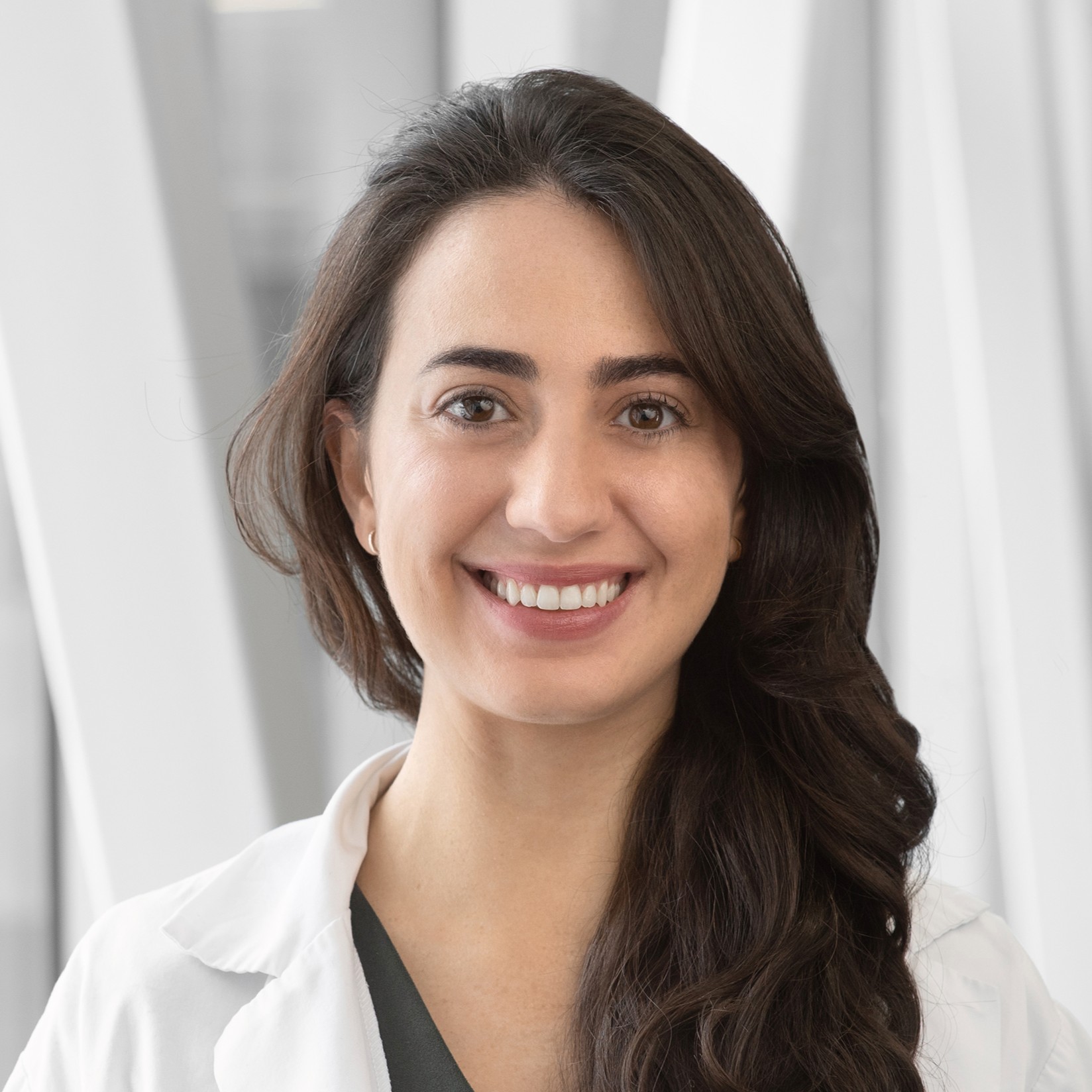
Arielle Elkrief, MD, FRCPC is a clinician–scientist (FRQS J1) and Assistant Professor in the Department of Medicine, Division of Oncology at the Centre hospitalier de l’Université de Montréal (CHUM), where she also serves as Co-Director of the CHUM Microbiome Centre. She leads a multidisciplinary translational research program with the overarching goal of developing microbiome-based therapeutic strategies to enhance the efficacy of anticancer immunotherapy. Her laboratory integrates clinical trials, preclinical models, and advanced computational oncology to design and test novel microbiome-based interventions including fecal microbiota transplantation, prebiotics, nutrition modulation, and next-generation live biotherapeutic products.
Arielle Elkrief will present "Nutritionist-Led Intervention to Improve Immune Checkpoint Inhibitor Efficacy in Patients With Lung Cancer" during the Gairdner Connects programming.
"Being selected by a Gairdner Laureate is a tremendous honour. The Gairdner Awards represent the pinnacle of scientific achievement in Canada and globally, and to be recognized by a Laureate affirms the importance of pursuing bold, ground-breaking science. This opportunity reflects not only recognition of my own work, but also of the teams and patients who make this research possible."
Joel Finbloom, PhD
Selected by: Michael J. Welsh and Paul Negulescu

Joel Finbloom is an Assistant Professor of Pharmaceutical Sciences at the University of British Columbia. The Finbloom lab develops bioinspired materials that interface with microbial communities to tackle critical challenges in pharmaceutical sciences — treating antibiotic resistant bacterial infections and improving the oral delivery of bacterial therapeutics.
Joel Finbloom will present "Microbe-Interfacing Nanomaterials to Study and Treat Bacterial Biofilm Infections" during the International Symposium on Wednesday, October 22nd. Details here.
"Being selected for this honour by Dr. Welsh and Dr. Negulescu is truly humbling. I admire their incredible contributions both to our fundamental understanding of cystic fibrosis as well as pharmaceutical innovations to treat the disease. This integration of basic and applied science with an overarching goal of making a difference for patients is something that I hope to emulate in my career. I am excited to attend the Gairdner symposium and learn more about the cutting-edge research being presented."
Martha Jane Paynter, RN PhD
Selected by: Jennifer Stinson

Martha Paynter has worked to advance abortion access in Canada for over 20 years. A writer, nurse and public scholar, she is recognized internationally for her expertise at the nexus of reproductive justice and prisoner health. She is an associate professor at the University of New Brunswick Faculty of Nursing, where her research addresses the health rights of people experiencing incarceration and sexual and reproductive health care in Canada and around the world. She is the author of Abortion to Abolition: Reproductive Health and Justice in Canada (Fernwood, 2017) and has published extensively in national magazines (Chatelaine, Briarpatch) and scientific journals.
Paynter is a keen advocate for increasing the influence of women and gender diverse people in news media and participates regularly in interviews with national and international print, radio and TV press (CBC/Radio-Canada, Global, CTV). She values and fosters collaborations with community organizations and lived experience experts in reproductive health and prison justice. Paynter is a recipient of the 150th anniversary medal from the Senate of Canada for her volunteer service to the country (2017) and the King Charles III Coronation Medal for service to the nursing profession (2025).
Martha Paynter is presenting "Advancing Sexual and Reproductive Health Equity of People in Prisons" during the Gairdner Connects programming.
"It is exceptionally validating to have my research, which is deeply embedded in community, recognized as innovative and impactful science. I am thrilled to be selected by a fellow nurse, and to join her in advancing understanding of nursing’s contributions to discovery. I look forward to her mentorship and to the opportunity for immersion in the Gairdner community of dedicated researchers."
Nika Shakiba, PhD, PEng
Selected by: Spyros Artavanis-Tsakonas, Iva Greenwald, and Gary Struhl
.jpg?sfvrsn=4c41961f_1 "Nika Shakiba - Greenwald, Strul, A-T (Notch)")
Nika Shakiba is an Assistant Professor in the School of Biomedical Engineering (SBME) at the University of British Columbia. Nika received her Ph.D. in stem cell bioengineering at the University of Toronto and subsequently completed her postdoctoral training in the Synthetic Biology Center at Massachusetts Institute of Technology.
Her research program is interested in the “social lives” of stem cells: how these cells interact to influence one another’s survival and cell fate decisions, both in culture and embryonic development. Her lab uses systems and synthetic biology to understand the genetic rules that encode cooperative and competitive interactions between stem cells. Leveraging genetic engineering, her lab seeks to program these interactions to enable robust bioprocesses for manufacturing stem cell-derived cell therapies.
Aligned with her mission to make stem cells an engineerable substrate, she co-founded the international Virtual Human Development consortium, which brings together experimentalists and theoreticians around the central goal of creating a computer-based simulator of human embryonic development. This simulator provides a window into the formation of the human body while serving as a tool for rational cellular design. Beyond her research and teaching, Nika is passionate about providing equity in mentorship and multi-directional advice-sharing through her latest project, Advice to a Scientist .
Nika Shakiba is presenting "The Molecular Rules of Embryonic Stem Cell Competition" during the Laureate Lectures on Thursday, October 23rd. Details here.
"I am honoured to have been selected by Dr. Artavanis-Tsakonas, Dr. Greenwald and Dr. Struh for this award. Their transformative work on the Notch signalling pathway has seeded our fundamental understanding of how cells communicate as our bodies are built. I look forward to engaging with these Gairder Laureates and members of the community to discuss science and reflect on scientific journeys. The opportunity to network with such a vibrant group of high-calibre scientists is inspiring, providing a unique chance to learn the human stories behind the scientific discoveries."
Related Winners
-

Spyros Artavanis-Tsakonas
Ph.D. Professor Emeritus, Cell Biology, Harvard Medical School; Professor Emeritus, Collège de France -

André Briend
MD, Ph.D. Former Senior Scientist, Institut de Recherche pour le Développement; Adjunct Professor, Tampere Center for Child, Adolescent and Maternal Health Research, University of Tampere, Tampere, Finland; Affiliated Professor, Department of Nutrition, Exercise and Sports, Faculty of Science, University of Copenhagen, Copenhagen, Demark -

Daniel De Carvalho
Ph.D. Senior Scientist, Princess Margaret Cancer Centre, University Health Network; Professor, Department of Medical Biophysics, University of Toronto; Allan Slaight Scientist and Senior Scientist, Princess Margaret Cancer Centre. -

Iva Greenwald
Ph.D. Da Costa Professor of Biology, Dept of Biological Sciences, Columbia University; Professor of Biochemistry & Molecular Biophysics, Columbia University's Vagelos College of Physicians and Surgeons -
.tmb-cfthumb_fb.jpg?Culture=en&sfvrsn=dda3b96b_1)
-

Jennifer Stinson
RN-EC, Ph.D, CPNP, FAAN, CAHS Fellow Senior Scientist, SickKids Research Institute; Nurse Practitioner, The Hospital for Sick Children (SickKids); Co-Director, SickKids Centre for Pain Management, Research and Education; Professor, Lawrence S. Bloomberg Faculty of Nursing and Institute of Health Policy, Management and Evaluation, University of Toronto -

Gary Struhl
Ph.D. Herbert and Florence Irving Professor at the Zuckerman Institute; Professor of Genetics and Development, Columbia University's Vagelos College of Physicians and Surgeons -
.tmb-cfthumb_fb.jpg?Culture=en&sfvrsn=2b5338a9_1)
Michael J. Welsh
M.D. Roy J. Carver Professor of Internal Medicine and Molecular Physiology and Biophysics; Director, Pappajohn Biomedical Institute; Roy J. and Lucille A. Carver College of Medicine, University of Iowa


.tmb-cfthumb_s.webp?Culture=en&sfvrsn=dda3b96b_1)


.tmb-cfthumb_s.webp?Culture=en&sfvrsn=2b5338a9_1)
Speakers
-

Prativa Baral
PhD, MPH Assistant Professor (Research), Department of Global and Public Health, McGill University; Deputy Director, Pandemic and Emergency Readiness Lab (PERL), McGill University; Faculty Associate, Johns Hopkins Bloomberg School of Public Health; Co-Founder, Let Science Connect -
.tmb-cfthumb_fb.jpg?Culture=en&sfvrsn=5c10c9e0_1)
Arielle Elkrief
MD, FRCPC Assistant Professor, Dept of Oncology, Centre hospitalier de l'Université de Montréal (CHUM), University of Montreal; Co-Director, CHUM Microbiome Centre -
.tmb-cfthumb_fb.jpg?Culture=en&sfvrsn=352cf87d_1)
Joel Finbloom
PhD Assistant Professor, Faculty of Pharmaceutical Sciences, University of British Columbia -

Martha Jane Paynter
RN, PhD Associate Professor, Faculty of Nursing, University of New Brunswick-Fredericton; Clinical Scientist, ROSE Clinic, NS Health; Director of Nursing Research, Contraception and Abortion Research Team (CART-GRAC), UBC Faculty of Medicine; Founder and Director of Research, Wellness Within: An Organization for Health and Justice -
.tmb-cfthumb_fb.jpg?Culture=en&sfvrsn=4c41961f_1)
Nika Shakiba
PhD, P.Eng. Assistant Professor, School of Biomedical Engineering, University of British Columbia; Specially Appointed Adjunct Associated Professor, Premium Research Institute for Human Metaverse Medicine (PRIMe), The University of Osaka

.tmb-cfthumb_s.webp?Culture=en&sfvrsn=5c10c9e0_1)
.tmb-cfthumb_s.webp?Culture=en&sfvrsn=352cf87d_1)

.tmb-cfthumb_s.webp?Culture=en&sfvrsn=4c41961f_1)
Related event
-
 Multi day event
Gairdner Science Week 2025
From October 20–23, join us for a dynamic, week-long celebration of cutting-edge research, global health innovation, and the 2025 laureates.


46641d86-1628-452c-930a-2504e3712962.tmb-cfthumb_s.webp?Culture=en&sfvrsn=2b2d0ec9_1)


