
What the World’s Leading Scientists Want the Next Generation to Know

What does it take to make a scientific discovery?
For the 2026 Canada Gairdner Award laureates who joined this year’s Gairdner Award Winners Roundtables, it starts with knowing which questions to ask.
Across two interactive livestreams in September, Gairdner laureates spoke with Canadian students and educators about their research, their careers, and the challenges they encountered along the way. Presented in partnership with Exploring By the Seat of Your Pants, the Roundtables gave students a chance to engage directly with scientists whose discoveries are advancing our understanding of human health and disease.
Watch the full Roundtables:
Roundtable 1: https://youtube.com/live/8jebHjgU3jY?feature=share
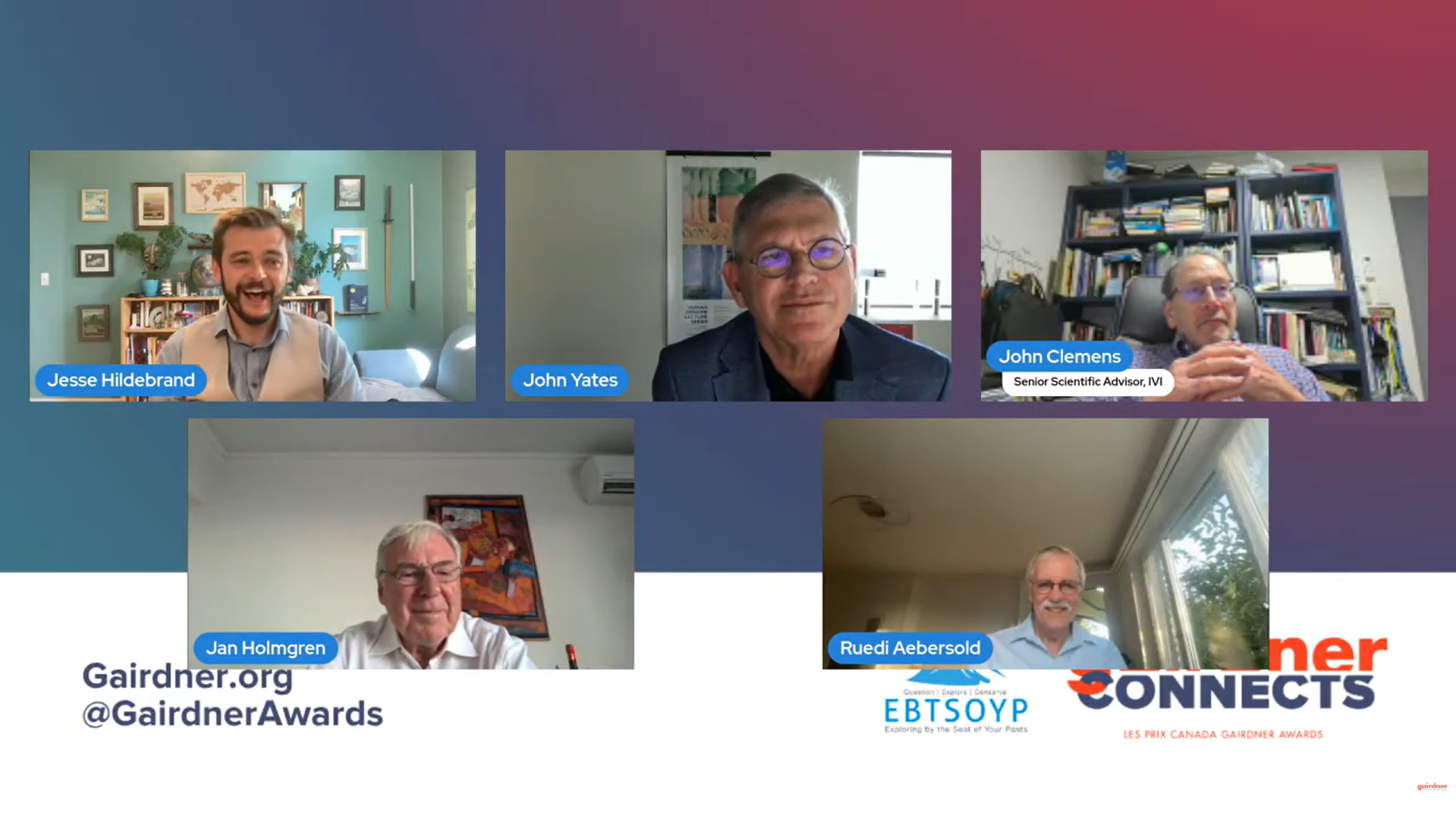
Ruedi Aebersold, John Clemens, Jan Holmgren, and John Yates
Roundtable 2: https://youtube.com/live/Th6SuAjiJXo?feature=share
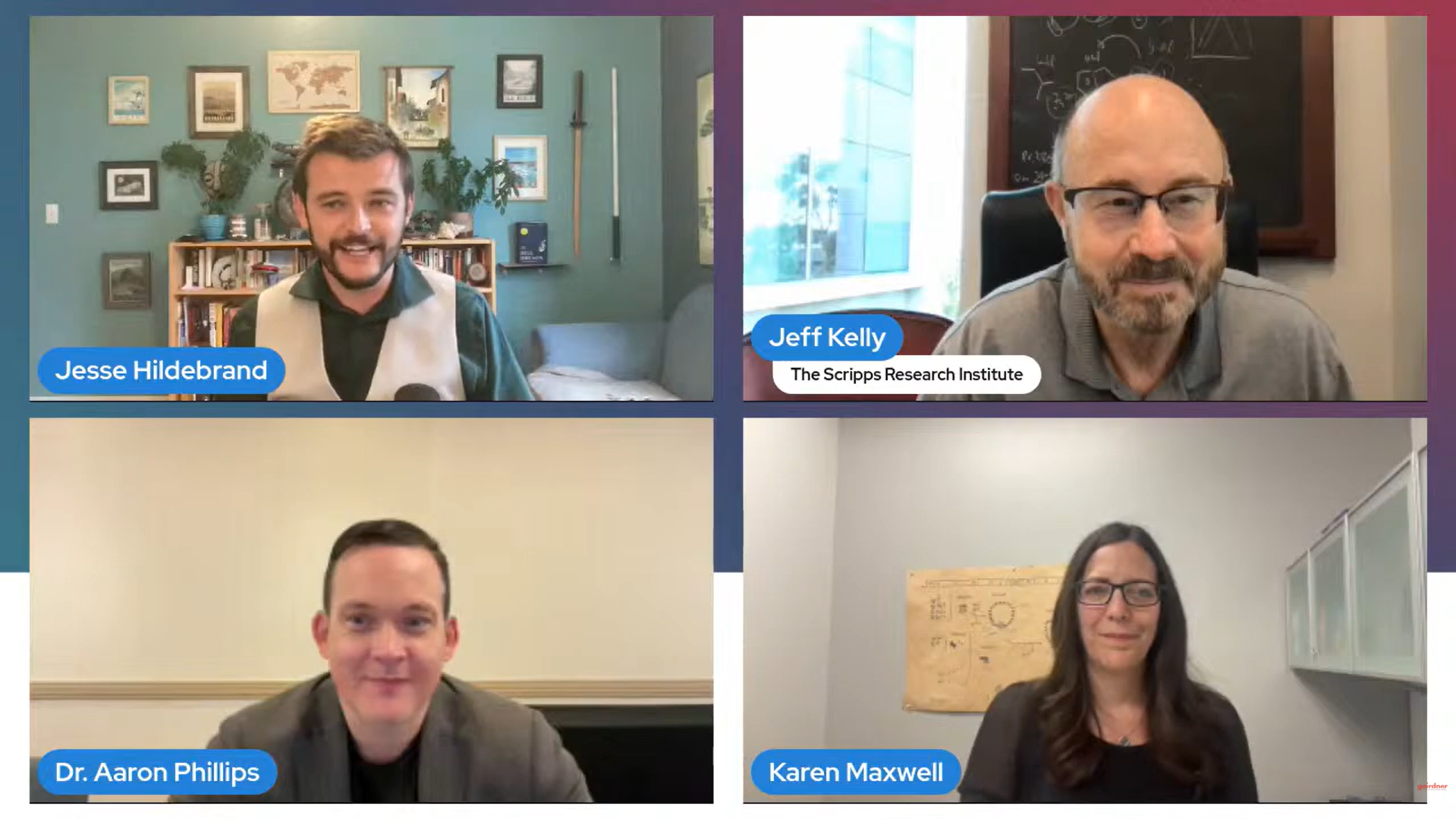
Jeffery Kelly, Karen Maxwell, and Aaron Phillips
The conversations ranged from proteomics and oral cholera vaccines to antibiotic-resistant bacteria, spinal cord injury and protein misfolding. Across both Roundtables, the laureates shared some common advice about pursuing scientific questions over years, sometimes decades.
Stay curious and keep asking questions
Curiosity was at the heart of the laureates’ advice.
For Karen Maxwell, curiosity means being willing to follow a question wherever it leads. Her research explores the ongoing battle between bacteria and the viruses that infect them. “Stay curious and don't be afraid of not knowing the answer. Science isn't about knowing answers; it's really about asking questions and being willing to follow where those questions lead,” she told students.
Jeffery Kelly, whose research revealed how misfolded proteins can clump together and cause disease and led to the development of a drug that slows a devastating form of amyloidosis, encouraged students to take the same approach to what is already known. “I always thought about what we didn't know more than what we knew,” he said. “And you know, after all, in science, that's what we're supposed to do: challenge dogma.”
Expect the unexpected
Scientific careers rarely follow a straight line, and neither do experiments.
Aaron Phillips, whose research has developed new ways to restore blood-pressure control after spinal cord injury and improve an essential bodily function for people living with paralysis, recalled spending months investigating a potential drug that he expected would have a major effect on blood-flow regulation. Instead, the results were “nothing, zero, totally surprising.”
Rather than abandoning the problem, Dr. Phillips and his team looked more closely at what they had found. “We ended up finding another purpose of this drug, and we pivoted into that,” Dr. Phillips said. “Thinking creatively…being very observant of your findings and looking into the details is important. Every scientific career is full of failures, not grand failures, but small failures, and I think it's really important to take time to celebrate your successes with your team.”
Jeffery Kelly offered a similar perspective on experiments that don't produce the expected result. “Experiments can fail based on your hypothesis, but if you have really keen observation skills, that's how you can turn failure into tremendous success,” he said. “We can discover things in science that you might not even have been able to envision, and so I don't think about experiments as failed, just our inability to interpret them.”
The laureates were equally candid about the less visible failures of scientific careers: rejection, criticism, and long periods without a breakthrough.
“Tenacity is what's really key to keep going, but the highs that you get from successes are just amazing,” John Yates, whose work together with Ruedi Aebersold and Matthias Mann helped establish modern system proteomics and made it possible to study thousands of proteins in a cell at once, told students.
For Ruedi Aebersold, the rarity of those moments is part of what makes them so meaningful. “As scientists, we have the rare occasion that we can see or measure something for the first time that no one else has ever experienced. And if that happens, that is an amazing experience.”
Don't plan every step of the journey
The laureates also encouraged students not to feel pressure to map out their entire careers.
Dr. Aebersold suggested having a general direction while remaining open to opportunities that emerge along the way. “There is a lot of serendipity involved, like who you meet, what you learn, what you read,” he said.
Jan Holmgren, whose work alongside John Clemens helped lead to the development of an oral cholera vaccine, offered similar advice, encouraging students to give themselves time to find their way. “I think it's important that you start young and that you then also see that you have a lot of time to find your way,” he said.
He also encouraged students to look beyond their own fields and talk to researchers with different expertise. “More often than not, I think you can find areas where you would like to start something together, where two different types of expertise, even if you are young, can be very complementary,” Dr. Holmgren said.
His own decades-long collaboration with John Clemens is a powerful example. Dr. Holmgren’s basic science expertise and Dr. Clemens’ clinical and epidemiological experience came together to help develop a safe, affordable oral cholera vaccine that is now used to protect communities, particularly those without reliable access to clean water and sanitation.
Discovery doesn't end in the lab
The laureates’ experiences also showed that making a discovery is only part of the process. Translating research into something that can benefit people can take years and requires researchers to think beyond the laboratory.
Dr. Clemens offered a simple piece of advice: “Think about the end while you're still at the beginning.” He recalled discovering during a vaccine trial in Bangladesh that the carbonated buffer used alongside the oral cholera vaccine was not acceptable to the local population. The solution was straightforward: the buffer had to be shaken to remove the bubbles. It was a small but important reminder that successful research ultimately has to work in the communities it is intended to serve.
For Dr. Holmgren, collaboration across disciplines has also opened new possibilities. Some of his best work, he said, emerged through interactions with protein chemists, glycolipid chemists and epidemiologists. Discussing the interaction between specialties, he shared, “There are interesting new arenas that none of us had previously thought of, but it can also mean that we can do things together that are novel and important.”
Find what keeps you curious
Rather than offering students a formula for building a scientific career, the laureates shared their own experiences of finding their way. Their advice was consistent: stay curious, pay attention to what surprises you, find people you can learn from, and don't be afraid to change directions.
“Your path is never going to be linear, so bear that in mind and keep your eyes open,” Dr. Yates told students. “Find what gets you excited and pursue it.”
For Dr. Maxwell, that means being comfortable with uncertainty: “Stay curious and don't be afraid of not knowing the answer.” Behind every major discovery are years of questions, wrong turns, unexpected results, collaboration, and persistence. The laureates reminded students that they don't need to know exactly where their scientific path will lead. They just need to stay curious enough to follow it.
Watch the full Roundtables:
Roundtable 1: https://youtube.com/live/8jebHjgU3jY?feature=share
Ruedi Aebersold, John Clemens, Jan Holmgren, and John Yates
Roundtable 2: https://youtube.com/live/Th6SuAjiJXo?feature=share
Jeffery Kelly, Karen Maxwell, and Aaron Phillips
Related Winners
-
a541199f-d0b6-43cc-94d3-fb0e8d2aa1d6.tmb-cfthumb_fb.jpg?Culture=en&sfvrsn=cc18abc0_1)
Ruedi Aebersold
Professor Emeritus, Molecular Systems Biology, Institute of Molecular Systems Biology, Department of Biology, ETH Zurich, Switzerland -
2d96fa65-0e03-4e84-9f6c-a64a1d81a42e.tmb-cfthumb_fb.jpg?Culture=en&sfvrsn=62dbeff1_1)
John D. Clemens
MD Senior Scientific Advisor to the Director General, International Vaccine Institute, Seoul, South Korea; Adjunct Professor of Epidemiology, UCLA Fielding School of Public Health, Los Angeles, United States -
.tmb-cfthumb_fb.jpg?Culture=en&sfvrsn=9b46cf65_1)
-
-(1).tmb-cfthumb_fb.jpg?Culture=en&sfvrsn=48f39abf_1)
Jeffery W. Kelly
PhD H. Lutcher Brown Professor of Chemistry, Department of Chemistry, Scripps Research, La Jolla, United States -
.tmb-cfthumb_fb.jpeg?Culture=en&sfvrsn=594ac2c7_1)
Karen Maxwell
Professor, Department of Biochemistry, Temerty Faculty of Medicine, University of Toronto, Canada -
.tmb-cfthumb_fb.jpg?Culture=en&sfvrsn=15537493_1)
Aaron Phillips
Professor, Departments of Clinical Neurosciences, Cardiac Sciences, Physiology and Pharmacology, University of Calgary; Associate Dean, Innovation and Commercialization, Cumming School of Medicine, University of Calgary, Canada -
79ee4d99-6a5c-4eb2-892e-90b07c6aec52.tmb-cfthumb_fb.png?Culture=en&sfvrsn=c200012c_1)
John R. Yates III
PhD John Lytton Young Endowed Chair and Professor, Department of Integrative Structural and Computational Biology, Scripps Research, La Jolla, United States
a541199f-d0b6-43cc-94d3-fb0e8d2aa1d6.tmb-cfthumb_s.webp?Culture=en&sfvrsn=cc18abc0_1)
2d96fa65-0e03-4e84-9f6c-a64a1d81a42e.tmb-cfthumb_s.webp?Culture=en&sfvrsn=62dbeff1_1)
.tmb-cfthumb_s.webp?Culture=en&sfvrsn=9b46cf65_1)
-(1).tmb-cfthumb_s.webp?Culture=en&sfvrsn=48f39abf_1)
.tmb-cfthumb_s.webp?Culture=en&sfvrsn=594ac2c7_1)
.tmb-cfthumb_s.webp?Culture=en&sfvrsn=15537493_1)
79ee4d99-6a5c-4eb2-892e-90b07c6aec52.tmb-cfthumb_s.webp?Culture=en&sfvrsn=c200012c_1)
Related Partner
-

Exploring By The Seat of Your Pants
EBTSOYP- Partner


-min-(1).tmb-cfthumb_s.webp?Culture=en&sfvrsn=ef561fc0_1)
