
Explore the Science of Ruedi Aebersold, Matthias Mann and John Yates


Discover how groundbreaking advances in mass spectrometry transformed scientists’ ability to identify and measure proteins — helping establish the field of modern proteomics.
Explore the Science of Ruedi Aebersold, Matthias Mann and John Yates
The Gairdner Foundation’s new 2026 Award Winner Article Collection brings the discoveries behind this year’s Canada Gairdner Awards to life through stories written with young readers in mind. In this article, learn how scientists use mass spectrometry to identify proteins, how peptides provide clues about which proteins are present in a sample, and how techniques involving isotopes allow researchers to measure and compare protein abundance. See how the pioneering work of Ruedi Aebersold, Matthias Mann and John Yates helped turn proteomics into a powerful tool for understanding biology, health and disease.
Test your knowledge
Ready to put what you learned to the test? Take our interactive Kahoot quiz to review key concepts from the article and see how much you know about proteins, mass spectrometry and proteomics.
About the Collection
To explore the other stories in this series, check out the full collection here. Across the six articles, you'll encounter big questions such as:
- How can viruses help us fight antibiotic-resistant bacteria?
- How can technology help regulate blood pressure after spinal cord injury?
- How can we stop misfolded proteins from causing disease?
- How can scientists identify, measure and study thousands of proteins?
- How can scientists use 3D images to see inside cells?
- How can oral vaccines help prevent cholera?
About the Creators
Each article was written by Gairdner student intern Leanne Cherry, an undergraduate student at McGill University studying Cognitive Science and Communication Studies, and developed in collaboration with the Award winners themselves. Passionate about science communication, Leanne is interested in making research accessible and combating science and health misinformation.
The articles were reviewed by the students from the Canadian Association of Girls in Science (CAGIS), whose thoughtful feedback helped make these stories clear, accurate and engaging for young readers.
Illustrations were created by Heather Ng-Cornish, an illustrator and communicator based in Ontario. Heather brings her science communication experience to her illustrations, creating clear, colourful and accessible visuals that help bring scientific ideas to life. To see more of her work, visit www.heatherngcornish.com.
We hope these stories encourage you to stay curious, ask big questions and imagine the discoveries still waiting to be made.
Related Winners
-
a541199f-d0b6-43cc-94d3-fb0e8d2aa1d6.tmb-cfthumb_fb.jpg?Culture=en&sfvrsn=cc18abc0_1)
Ruedi Aebersold
Professor Emeritus, Molecular Systems Biology, Institute of Molecular Systems Biology, Department of Biology, ETH Zurich, Switzerland -
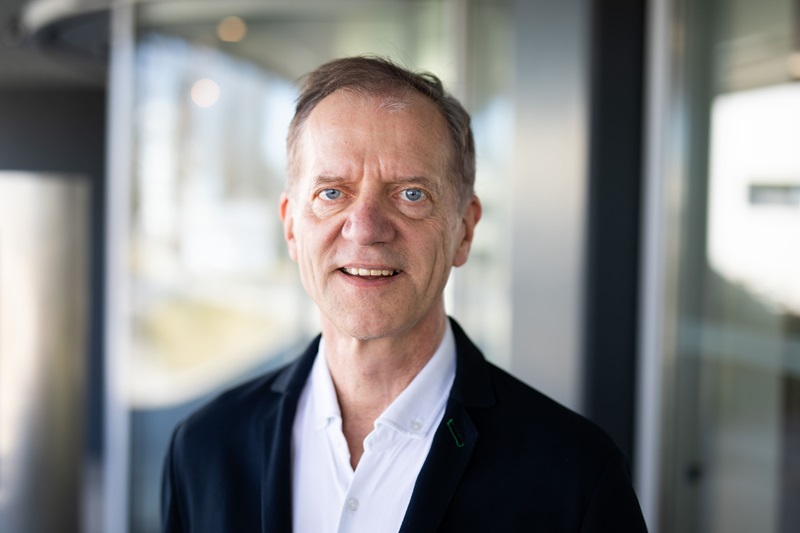
Matthias Mann
Director of Department of Proteomics and Signal Transduction, Max Planck Institute of Biochemistry, Martinsried, Germany -
79ee4d99-6a5c-4eb2-892e-90b07c6aec52.tmb-cfthumb_fb.png?Culture=en&sfvrsn=c200012c_1)
John R. Yates III
PhD John Lytton Young Endowed Chair and Professor, Department of Integrative Structural and Computational Biology, Scripps Research, La Jolla, United States
a541199f-d0b6-43cc-94d3-fb0e8d2aa1d6.tmb-cfthumb_s.webp?Culture=en&sfvrsn=cc18abc0_1)

79ee4d99-6a5c-4eb2-892e-90b07c6aec52.tmb-cfthumb_s.webp?Culture=en&sfvrsn=c200012c_1)
d596f271-b7eb-4ad7-9248-36230f8daaaa.tmb-cfthumb_s.webp?Culture=en&sfvrsn=c1d6376_1)

.tmb-cfthumb_s.webp?Culture=en&sfvrsn=9de27e66_1)
.tmb-cfthumb_s.webp?Culture=en&sfvrsn=14b5acc1_1)
.tmb-cfthumb_s.webp?Culture=en&sfvrsn=7face192_1)
.tmb-cfthumb_s.webp?Culture=en&sfvrsn=6eb9657a_1)